An eight-voice, analog-modeled synthesizer for macOS

One knob, marked ANALOG, gives every voice its own drift, so a held chord keeps moving against itself. Behind it are a Moog-style ladder filter and a sequencer that stores a chord type on each step. It ships on 31 October 2026 as AU and VST3, for macOS 13.7 or later on Apple Silicon and Intel.

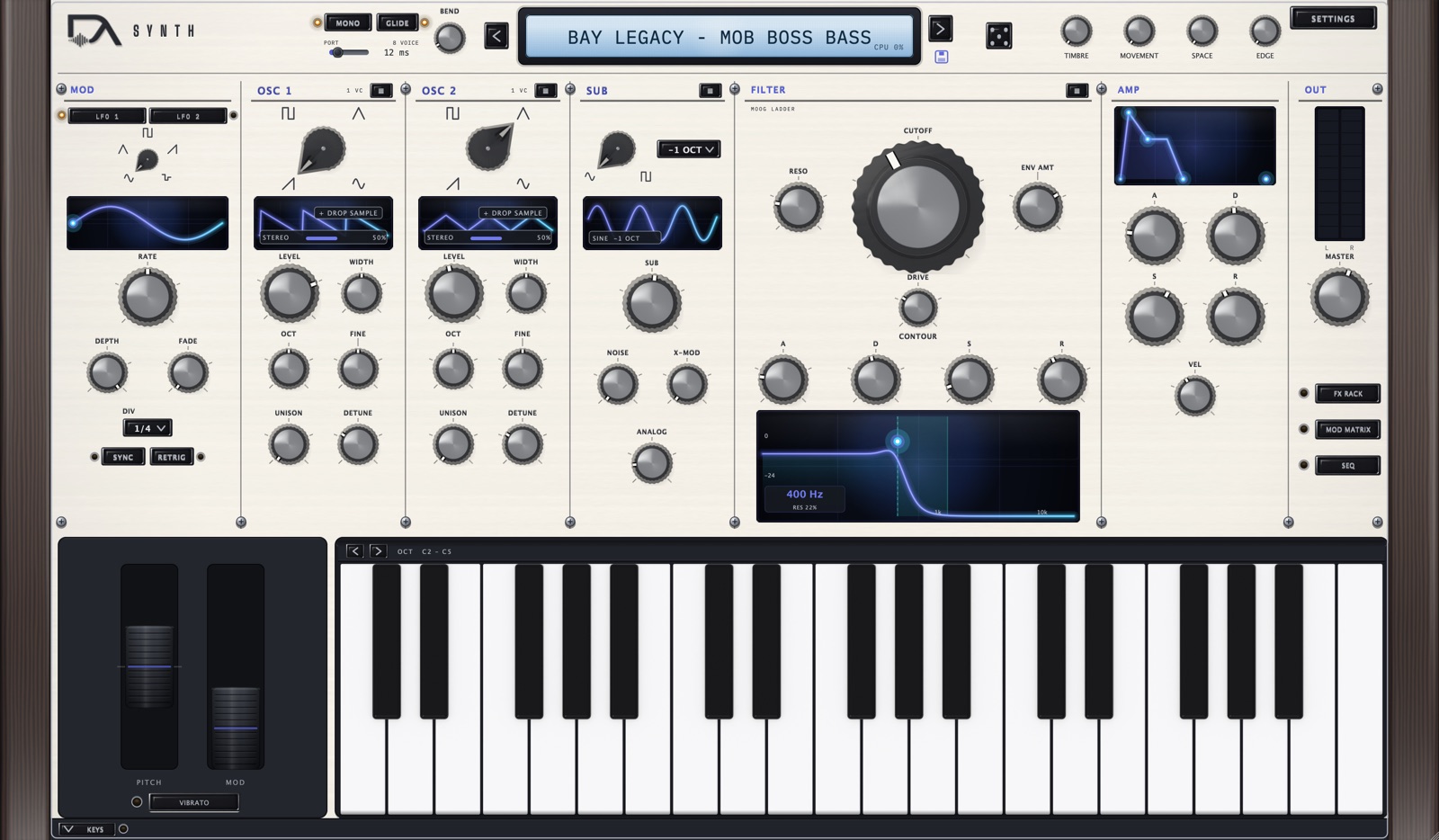
The DeAnalog Synth panel: a cream faceplate in a wood case, with modulation, two oscillators, sub, filter and amp sections above a three-octave keyboard. The display reads Bay Legacy – Mob Boss Bass.

The panel, section by section

These are crops of the real editor. The instrument plays eight voices, or mono with glide, and the panel comes in four faceplates.

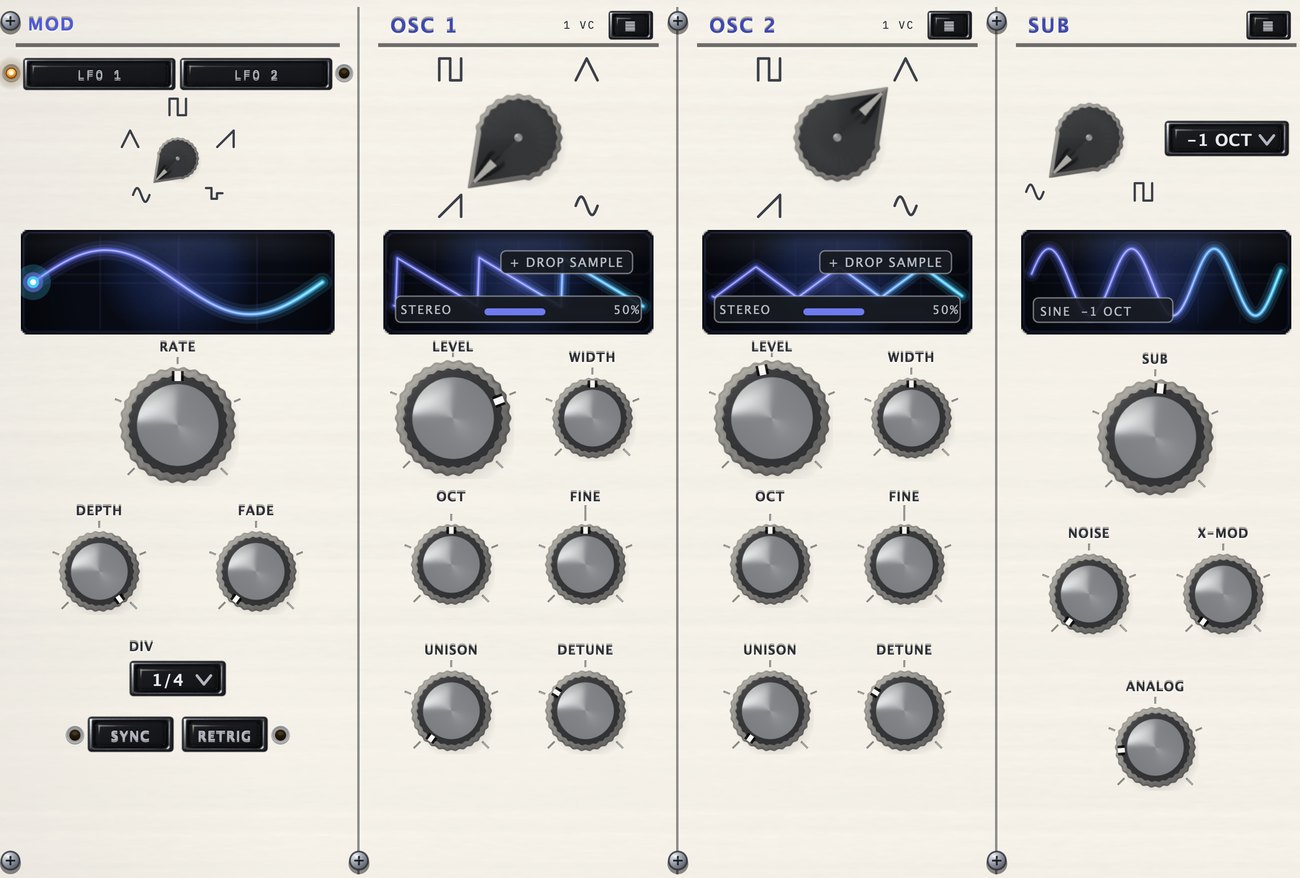
The left half of the panel: the MOD section with two LFOs, then OSC 1, OSC 2 and SUB, each with a waveform knob, a small display, and level, width, octave, fine, unison and detune knobs. The ANALOG knob is at the bottom of SUB.
MOD, OSC 1, OSC 2 and SUB. ANALOG, the drift control, is the bottom knob of SUB.

Oscillators, sub and noise

Each oscillator has saw, pulse, triangle and sine, with pulse width, octave, coarse and fine tuning, unison and stereo spread. The sub has its own waveform and octave, and the noise source is white or pink.

FM, ring modulation and hard sync cross-modulate the oscillators for metallic and hollow tones that a filter alone cannot make.

Each of the two LFOs has a shape (sine, triangle, saw, square or sample and hold), host sync by note division, fade-in and retrigger.
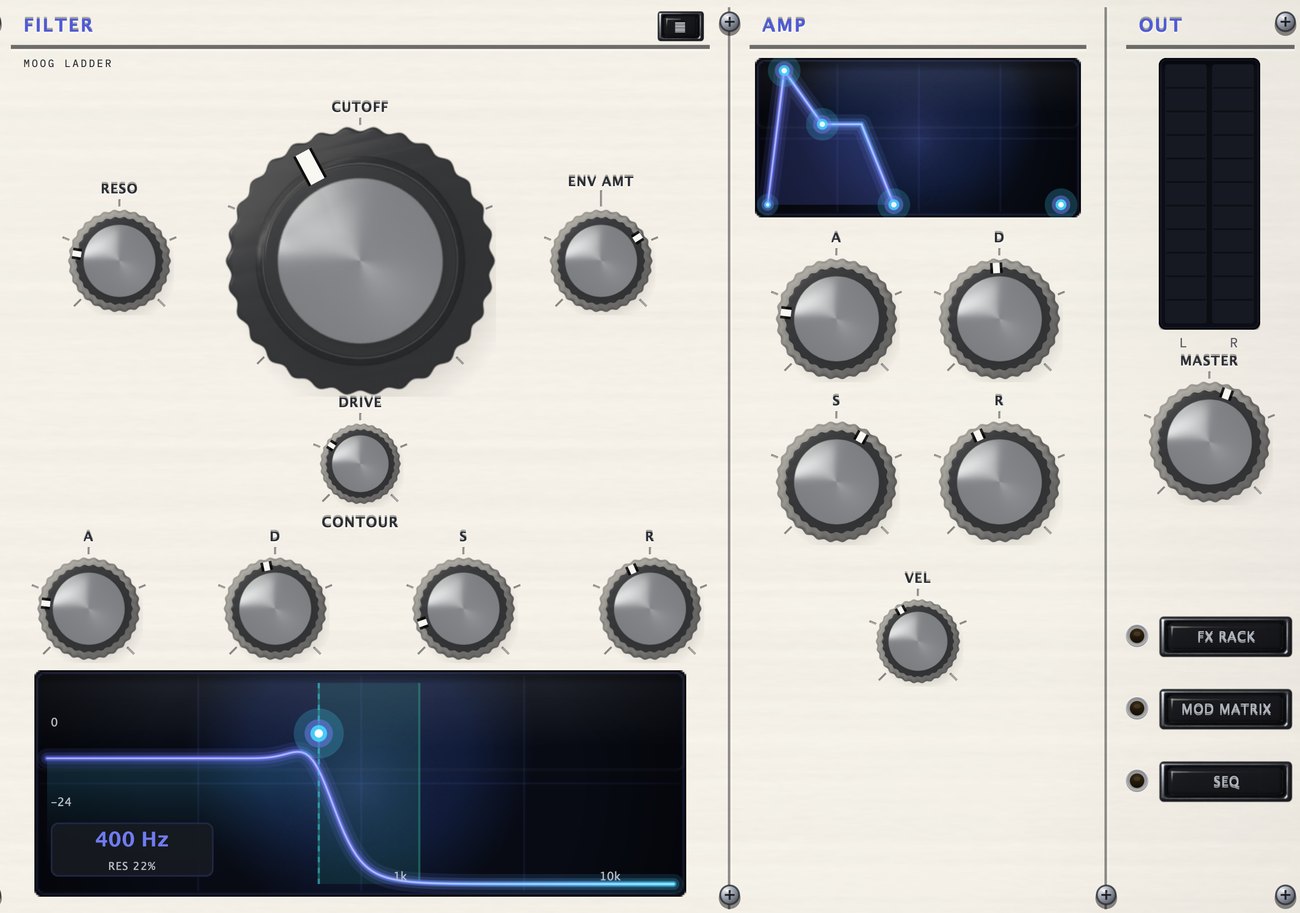
The right half of the panel: the FILTER section, marked Moog ladder, with cutoff, resonance, envelope amount, drive and contour knobs and four envelope knobs above a live response curve reading 400 Hz; then the AMP envelope, the master knob and the OUT meter.
FILTER, AMP and OUT. The curve under the filter is drawn live.

The filter

A ladder in four modes: 24 dB and 12 dB low-pass, high-pass and band-pass, with drive, key tracking and envelope amount. With the oscillators down and resonance up it self-oscillates, and the sine it settles on is a sound you can play. The measurements are on How it was made.

Amp and filter have separate envelopes, and a mod matrix sits behind the MOD MATRIX button.

Quality is a setting: Draft, Standard and High change how much the nonlinear stages and the FM anti-aliasing oversample, so you can spend CPU where the track needs it.

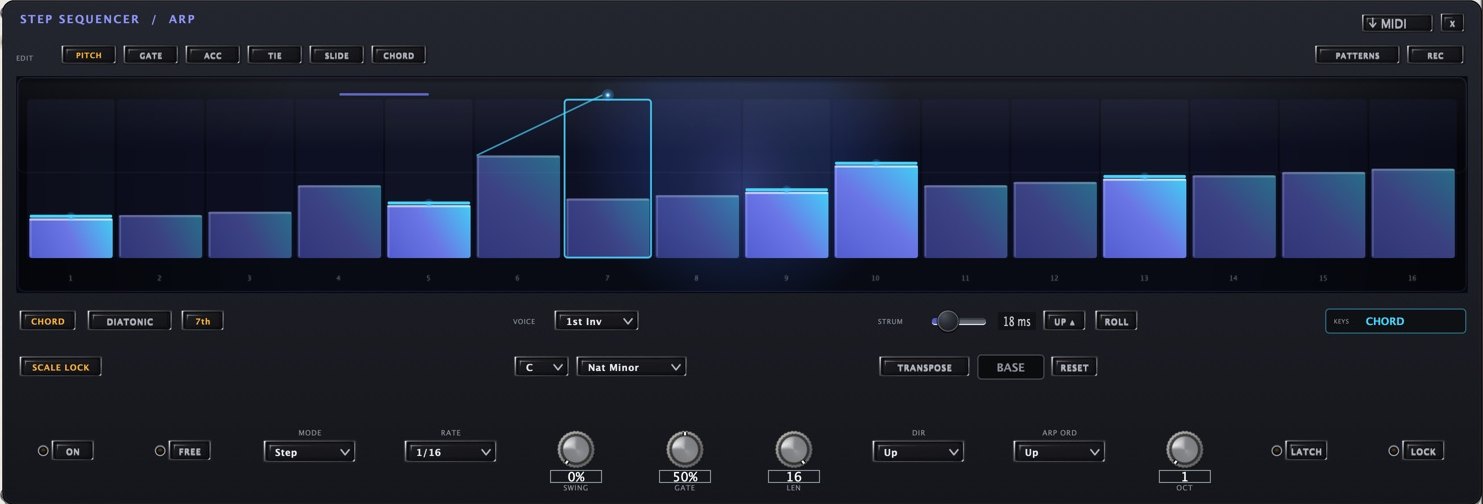
The step sequencer open over the panel: sixteen step columns with edit tabs for pitch, gate, accent, tie, slide and chord, then chord, diatonic, scale lock, strum, swing, gate length, direction and arp order controls.
The sequencer page, with the CHORD edit tab beside PITCH, GATE, ACC, TIE and SLIDE.

Sequencer and chord memory

Sixteen steps, with swing, gate length, direction, note order, octave range and latch, free-running or locked to the host transport. Chord memory turns one held note into the chord that belongs there, in fourteen types. Four of them, m9, maj9, 9 and 13, are rootless, and there is a strum.

A sequence can carry its own chord type on each step, so a pattern moves through changes without you touching the keyboard. Scale lock sets a root and a scale, and every step stays in key however far you transpose.

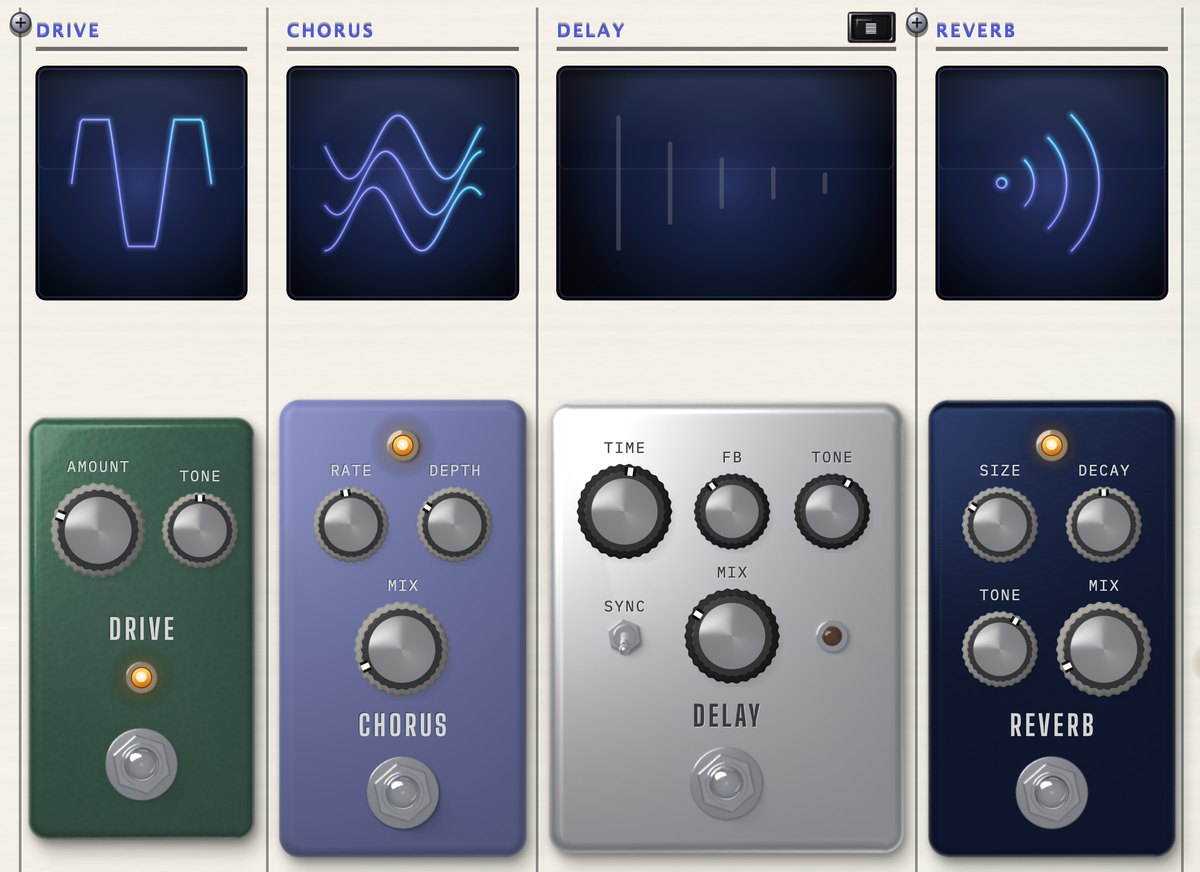
The effects rack open: four pedals side by side, drive in green, chorus in lavender, delay in brushed aluminium and reverb in navy, each with a small display, its knobs and a footswitch.
The open rack takes the place of FILTER and AMP. The oscillators, OUT and the keyboard stay where they are.

Effects, macros and MIDI

Four effects run in a fixed order: drive, chorus, delay, reverb, drawn as pedals.

The four macros, Timbre, Movement, Space and Edge, sit at the top right of the panel. Each preset maps them to whatever that sound needs moved.

MIDI learn maps any control to a CC on your keyboard, and you can save the map as the default for every project.

Soft Prophet and Sub Source together

A funk-fusion piece on two DeAnalog Synth patches, Soft Prophet on top and Sub Source underneath, with an EP and a grand piano alongside. It runs 2 minutes 35 seconds, and the picture is the plug-in's own interface with the knobs and filter sweeps as they move. Nothing loads from YouTube until you press play.

Demo 7, 2 minutes 5 seconds

Every sound here is DeAnalog Synth. No samples, no outboard.

153 presets in 14 collections

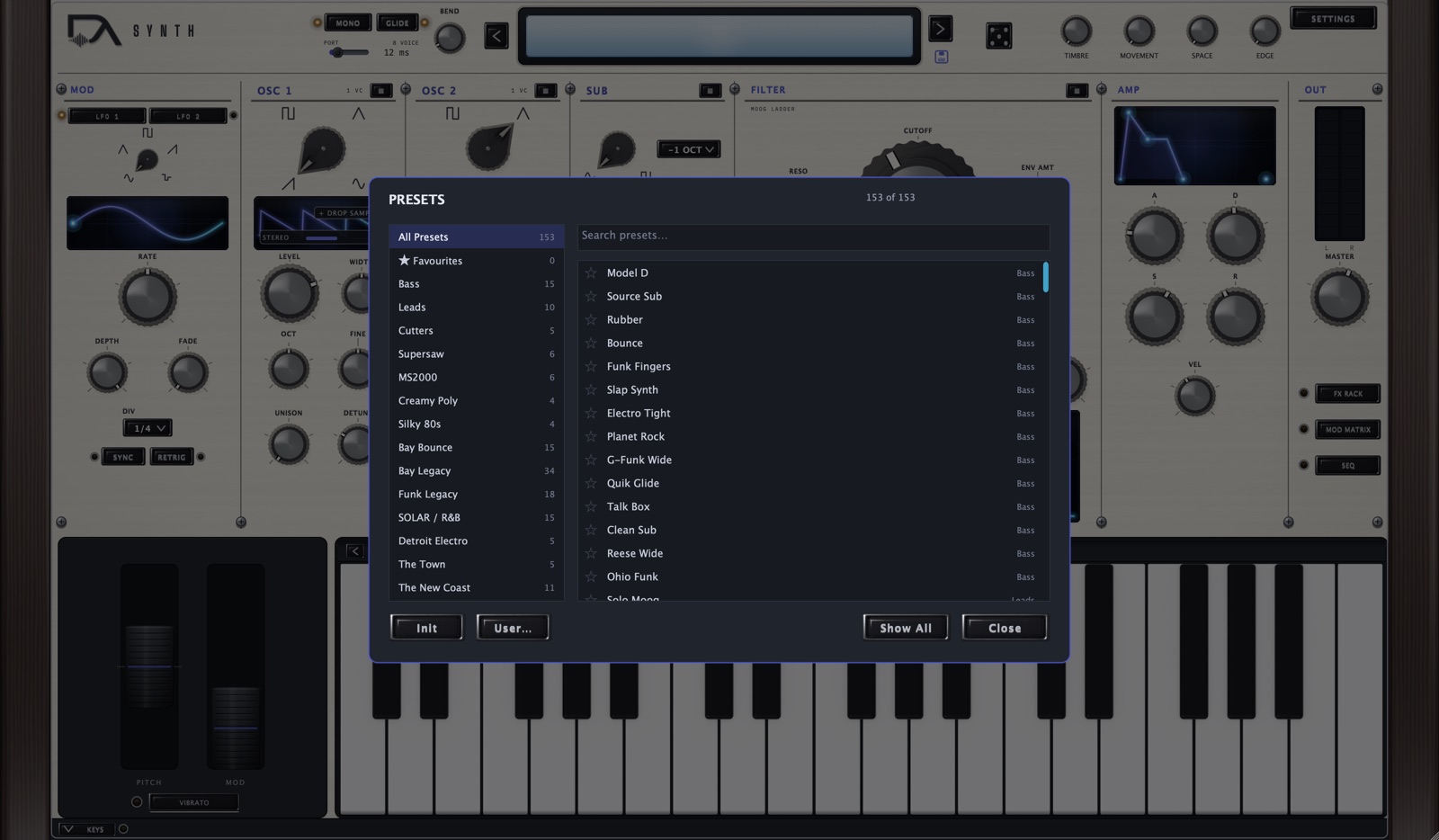
Collections are named for lineages, such as Bay Legacy and Funk Legacy, and every patch is named for the job it does in a track. The conventions are the same in all of them: velocity opens the filter, the mod wheel carries vibrato, and the macros move what that patch needs moved. You can step through a whole collection with the arrows and not meet a patch that behaves differently from its neighbours.

Patches in each collection.
CollectionPatches
Bay Legacy34
Funk Legacy18
Bass15
Bay Bounce15
SOLAR / R&B15
The New Coast11
Leads10
MS20006
Supersaw6
Cutters5
Detroit Electro5
The Town5
Creamy Poly4
Silky 80s4
The preset browser open over the panel, with the collection list down the left, patch names in the middle, and a search field at the top.
The browser filters by collection and by name, and stars travel with your preferences.

The four effects

The effects are available now, from the links below.

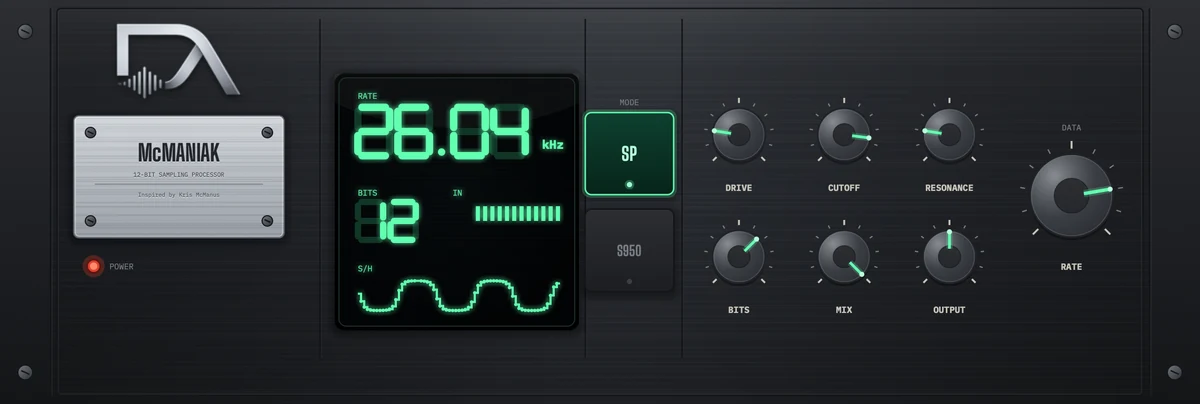
The McManiak panel: a dark sampler-style unit with a green numeric display and a row of knobs.

McManiak

12- and 16-bit sampling grit: crunch and aliasing.

Name your price. macOS (AU, VST3) and Windows 10 or later (VST3).

Get McManiak
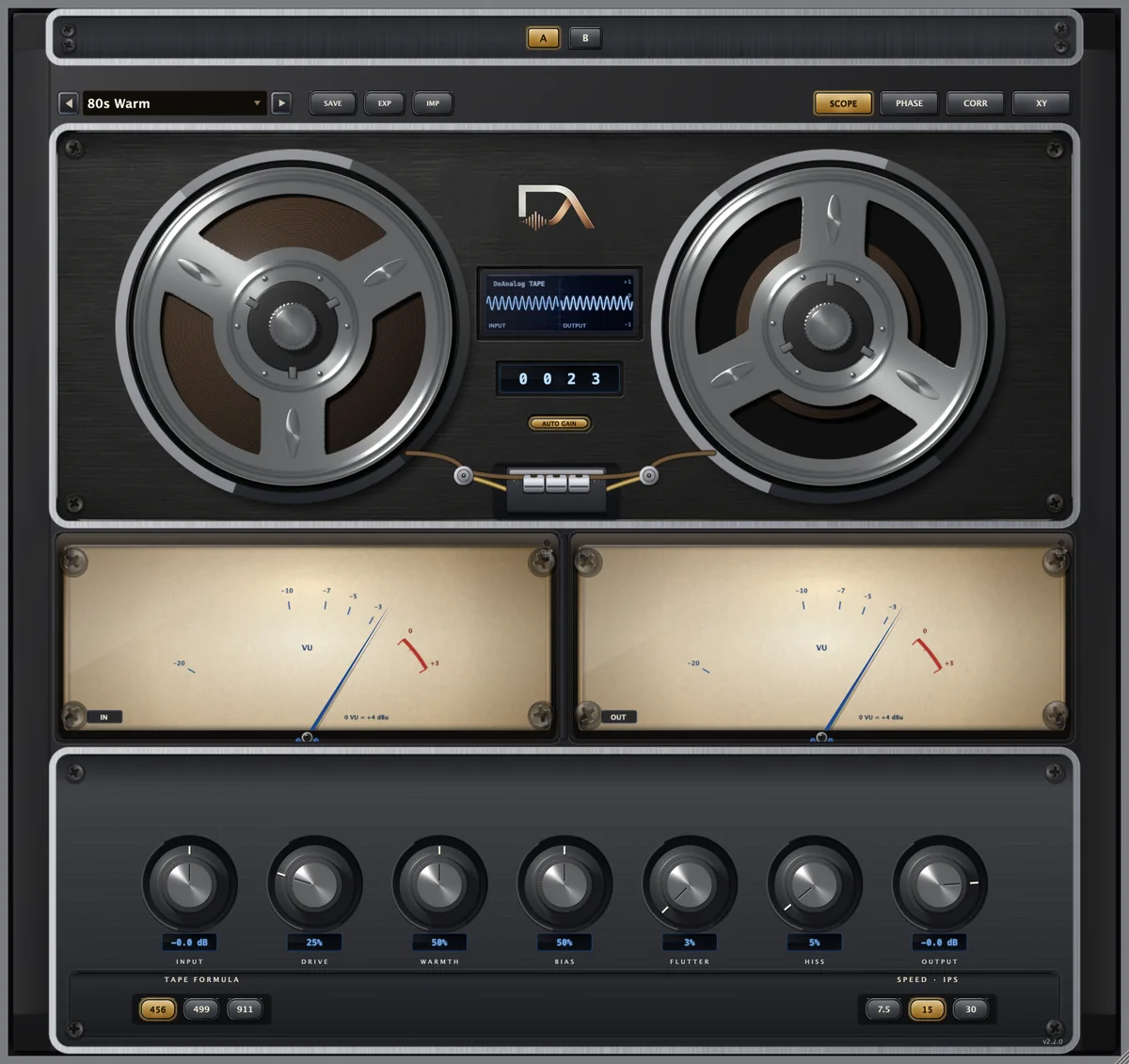
The DeAnalog Tape panel: two reels turning above a VU meter and a row of knobs.

DeAnalog Tape

Tape saturation, harmonics and hiss, with live VU metering and auto gain so the level holds while you push it.

Free. macOS 13.7 or later (AU, VST3) and Windows 10 or later (VST3).

Get DeAnalog Tape
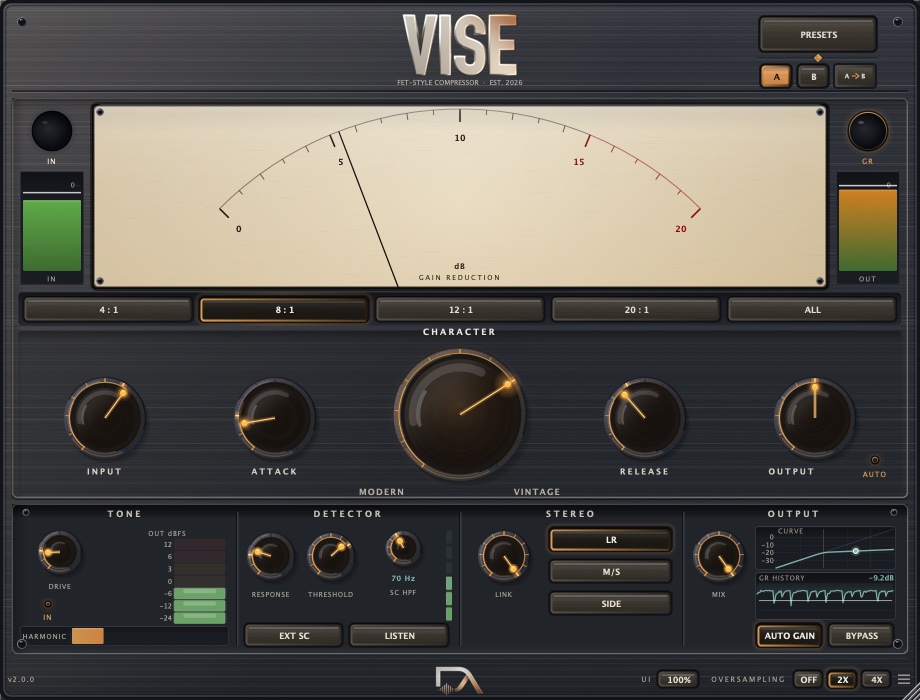
The Vise panel: a large backlit meter above compression controls in gunmetal and amber.

Vise

FET-style compression with a detector you can move: blend from feedforward grip to feedback give, then sidechain it, oversample it and blend it back. 23 starting points, grouped by source.

Free. macOS 13.7 or later (AU, VST3) and Windows 10 or later (VST3).

Get Vise
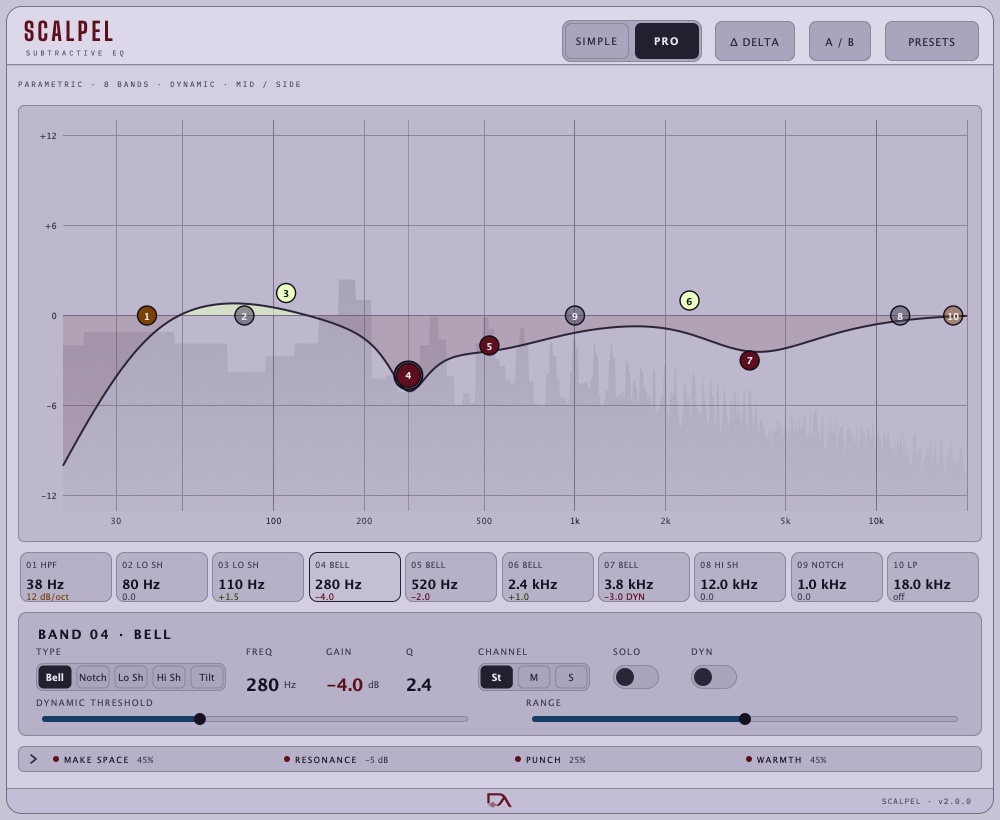
The SCALPEL panel: a wide spectrum display with eight dynamic EQ bands beneath it.

SCALPEL

Cut what is wrong and hear exactly what you removed: a resonance suppressor, eight dynamic bands, a delta monitor that plays you the difference, and 24 starting points by source.

Free. macOS 13.7 or later (AU, VST3) and Windows 10 or later (VST3).

Get SCALPEL

Where it runs

The instrument is macOS only. The installer places both an Audio Unit and a VST3, so any host on macOS 13.7 or later that loads either will take it. Ableton Live, Logic Pro, FL Studio, Cubase, Studio One, Bitwig and Reaper all do. The four effects also run as VST3 on Windows 10 or later. The support page has the install paths for both.

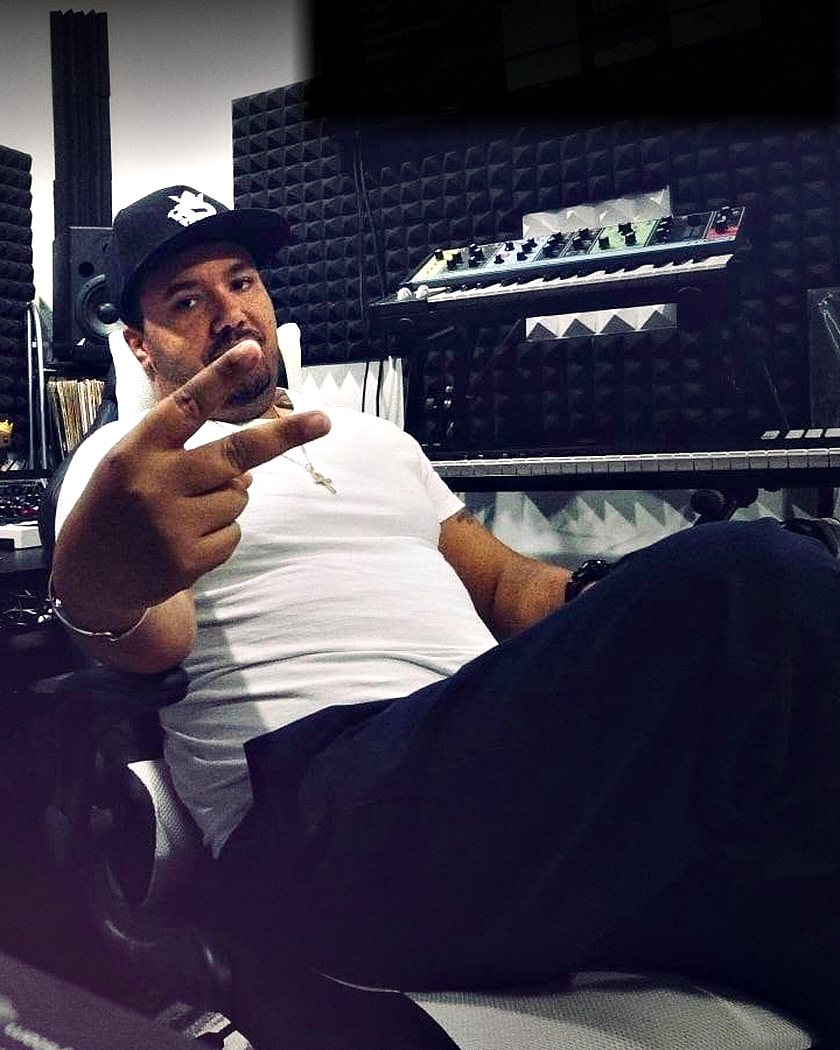
Nick DeAngelis in his studio, leaning back in a chair in a black cap and white T-shirt and holding two fingers up to the camera, with a synthesizer and acoustic foam panels behind him.

I'm Nick DeAngelis, and I make DeAnalog. Before the plug-ins I produced records as Mr. Analog out of West Palm Beach, Florida.

About me and the credits

DeAnalog Synth ships 31 October 2026

There is no pre-order. Send me an email and I will reply once, on the day it is out.

Email me at launch

That address is analog.lofi@gmail.com. One reply at launch, nothing else.